



Introduction
In today’s digital world, identity isn’t just a login — it’s the new security perimeter. Every credential, every permission, and every access request carries potential risk. Identity and Access Management (IAM) decides who gets in, what they can do, and how they’re monitored. Governance, Risk Management, and Compliance (GRC) defines why those controls exist and ensures they align with business, regulatory, and risk objectives.
Too often, these two worlds operate in silos — IAM buried in technical operations and GRC trapped in policies and audits. But the truth is, strong cybersecurity depends on their partnership. When IAM and GRC work together, organisations can move from reactive security to proactive governance.
In this article, we’ll explore:
- How IAM and GRC complement each other
- Why IAM is central to managing risk and compliance
- How tools like Microsoft Purview and Entra ID Governance bring this connection to life
- Practical examples and configurations that make governance actionable
Let’s dive in.
Where IAM Meets GRC: From Policy to Practice
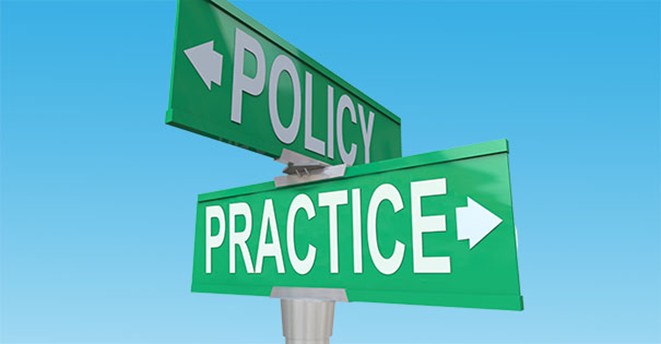
Governance → Enforcement
At its core, GRC sets the rules — defining policies, control objectives, and oversight. IAM makes those rules real.
Imagine a policy that says only the Finance team can access payroll data. GRC defines that rule. IAM enforces it — through role-based access control (RBAC), attribute-based access control (ABAC), or entitlement management. Together, they ensure that what’s written in a policy document is actually enforced in production systems.
Identity as a Risk Domain
Identity has become the new battleground for cyberattacks — from credential theft to privilege escalation and lateral movement. IAM plays a key role in spotting these risks before they escalate.
By identifying over-privileged users, dormant accounts, and third-party identities that cross trust boundaries, IAM provides the insights needed for continuous monitoring and risk scoring. It’s not just access control — it’s risk intelligence in action.
Compliance and Auditability
Regulations like GDPR, NIS2, and DORA demand proof — not just that policies exist, but that they’re enforced and traceable.
That’s where IAM shines. With access logs, review workflows, attestations, and separation-of-duty controls, IAM generates the evidence auditors expect. GRC platforms then bring it all together — aggregating this data, tracking exceptions, and showing a real-time view of compliance.
In short: GRC defines the “what” and “why.” IAM delivers the “how.” When they operate together, they create a closed loop of governance, monitoring, and remediation — driving both stronger security and smarter compliance.
As Forrester puts it, “When GRC and IAM work together, the benefits are greater than the sum of their parts.”
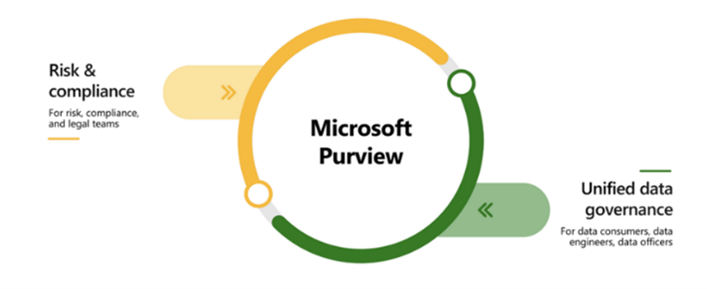
Microsoft’s ecosystem provides one of the most integrated ways to connect IAM and GRC objectives — combining Identity governance and Data governance under a unified umbrella.
Here’s how the key tools fit together:
Component | Purpose | How It Connects IAM + GRC |
Microsoft Purview | Data cataloguing, classification, and governance | Defines and enforces policies on sensitive data; integrates with IAM to control access based on classification |
Microsoft Entra ID Governance | Lifecycle management, access reviews, entitlement management | Automates user provisioning, access certification, and compliance workflows |
Purview Role & Permission Management | Fine-grained access control for data governance | Applies least-privilege access at catalogue, domain, or asset level |
Example: Conditional Access Based on Data Sensitivity
Let’s take a simple example. Suppose your policy says that Confidential data can only be accessed from managed devices on your corporate network.
Here’s how you can make that real:
- In Microsoft Purview, classify and label sensitive data (e.g., “Confidential”).
- In Entra ID, create Conditional Access policies that apply stricter access requirements (like MFA or compliant device) when users access those assets.
- Use Purview’s permissions and roles to ensure only approved users can even see those classified resources.
Now, your GRC policy — which used to live in a PDF — is live and enforceable across your environment.

When IAM and GRC operate together, compliance stops being a checkbox exercise. It becomes a dynamic system of trust — one that adapts to risk, scales with business change, and proves its effectiveness through data.
By using platforms like Microsoft Purview and Entra ID Governance, organisations can automate the connection between policy and enforcement — making governance practical, measurable, and resilient.
In an age where identity is the new security boundary, aligning governance with access isn’t just good practice — it’s essential.
Feel free to contact us at contact@infotechtion.com if you need any help configuring similar scenarios.
