



Welcome back to The Project Management Toolkit series. So far, we’ve explored Employee Recognition, Collaborating with Clients, Onboarding a New Project Manager, Microsoft Project, choosing the right Project Delivery Methodology and Getting the Basics Right and Stakeholder Engagement and Communication. These foundational topics have helped project managers elevate their leadership, improve collaboration, and build resilient project structures. Now, we turn to an equally critical aspect of successful project delivery: Performance Measurement.
Getting performance measurement right is crucial for the success of any project because it provides objective evidence of progress and results. While solid plans and empowered teams drive execution, it’s the metrics and data that reveal whether you’re truly on track and where adjustments are needed. By establishing clear metrics, monitoring progress, and learning from outcomes, project managers can ensure accountability, maintain control, and build confidence with stakeholders that the project will deliver its intended value.
Let’s take a closer look at the key practices and tools that support effective project performance measurement and control.
1. Define Project Success Metrics
Before you can measure performance, you need to determine what success looks like for your project. Defining clear success metrics (often called Key Performance Indicators, or KPIs) at the outset ensures everyone understands how progress and success will be evaluated. Your metrics should directly align with the project’s objectives and stakeholder expectations. For instance, if the objective is to deliver a product by a certain date within a set budget, then on-time delivery and budget variance are obvious metrics to track. If the goal is to improve customer satisfaction or product quality, find ways to quantify those as well. The key is to measure what matters most for your project’s success.
Key Components:
– Clear Objectives & KPIs: Identify quantifiable metrics linked to each primary project goal. For example, schedule adherence (e.g. meeting milestones on time), budget utilisation vs. planned budget, scope changes, quality metrics (defect rates, test success rates), and stakeholder satisfaction scores. Ensure each KPI has a clear definition so it’s easy to measure.
– Stakeholder Agreement: Involve sponsors and key stakeholders in defining success criteria. This alignment ensures that the metrics you track are considered valuable by those who care about the project’s outcome. Agree on what success looks like – whether it’s a percentage increase in efficiency, user adoption numbers, ROI, or other indicators – so there are no surprises at delivery.
– Measurability: Choose metrics that are actually measurable with the data and tools you have. Each KPI should have an available source of data (e.g. timesheets for effort hours, financial systems for cost, surveys for satisfaction). If a desired outcome is hard to quantify, break it into a proxy metric (for example, “improve product quality” could be measured by reducing customer support tickets or defect counts by X%).
2. Establish Baselines and Targets
Once you know what to measure, the next step is establishing baselines and targets for those metrics. A baseline is essentially the original plan or starting point against which progress is measured. It’s difficult to evaluate performance without knowing where you started or what you aimed to achieve. Set your project’s baseline at the outset – capturing key data such as the initial schedule, budget, scope, and quality expectations. Alongside baselines, set target values or thresholds for your metrics so you can judge success throughout the project life cycle.
Key Components:
– Baseline Schedule & Budget: Use your project plan to record the initial timeline and budget as fixed baselines. This includes key milestone dates, overall project end date, and planned costs or effort hours. The baseline allows you to later calculate schedule variance (are you ahead or behind?) and cost variance (over or under budget) by comparing current status against the original plan.
– Quality & Scope Benchmarks: Establish baseline expectations for deliverable quality and scope. For example, define acceptance criteria for key deliverables (what “good” looks like) and document the original scope so any changes can be measured. If you expect, say, less than 2% defects in a software product, note that target upfront.
– Performance Targets & Tolerances: For each KPI, decide on target values and tolerance ranges. For instance, you might set a target to deliver the project within +/– 5% of the budget and by a specific deadline. Determining these thresholds in advance helps in deciding when corrective action is needed. Many project managers also use OKRs (Objectives and Key Results) or similar goal-setting frameworks to clarify targets.
– Change Control Process: Link your performance baselines to a robust change control process. If scope or deliverables change due to evolving requirements, update the baseline and targets accordingly, rather than letting untracked changes distort performance data. This ensures that you’re always measuring against a relevant yardstick.
3. Continuous Monitoring & Reporting
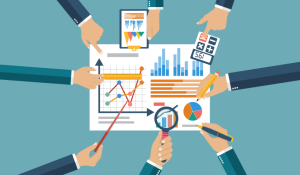
Performance measurement is not a one-time activity – it requires continuous monitoring throughout the project. Regularly tracking progress against your baselines and KPIs enables you to spot trends early, identify slippages or overruns, and communicate status to stakeholders proactively. A well-structured monitoring cadence (such as weekly status checks and monthly deep-dive reviews) helps maintain transparency and momentum. In the Project Management Basics post, we discussed the importance of having consistent status reports and risk/issue logs; those tools become extremely valuable when monitoring performance. The goal is to turn raw data into actionable insights that keep your project on track.
Key Components:
– Status Reports & Dashboards: Create a routine of sharing succinct status reports with your team and stakeholders, highlighting key performance data. Many organisations adopt RAG (Red-Amber-Green) status indicators for schedule, budget, and scope to quickly signal overall health. Similarly, consider using a simple dashboard or project management software that visually displays progress (% complete, tasks done vs remaining, budget spent vs budget planned) in real time. Microsoft Project, for example, can generate burndown charts and timelines automatically, while tools like Power BI or Excel can be used to create custom project dashboards.
– Milestone & Phase Reviews: Tie your monitoring efforts to project milestones or phase gates. At each significant milestone, do a brief performance evaluation: Are we meeting the milestone on time? How does actual spend compare to budget at this point? This can surface problems when there’s still time to correct them. Steering committee meetings (steerco) or sponsor reviews at key points are excellent opportunities to discuss performance metrics, not just activities.
– Issue & Risk Tracking: Leverage your risk and issue logs as performance management tools. If your KPIs show a troubling trend (e.g., velocity slowing down or repeated scope changes), log it as a risk or issue and manage it actively. Regular monitoring of these logs in project team meetings and stakeholder updates ensures potential performance problems are acknowledged and addressed.
– Stakeholder Communication: Keep stakeholders in the loop with the right level of detail. A solid communication plan (as we covered in the Stakeholder Management post) should specify how often and in what format performance will be reported to each audience. For example, senior executives might get a high-level dashboard monthly, while the core team reviews detailed metrics weekly. Timely, honest reporting of performance builds trust and allows stakeholders to help solve problems.
4. Tools and Techniques for Measurement
The right tools and techniques make performance measurement much more effective and less laborious. Modern project management tools can automate data collection and reporting, giving project managers more time to interpret the data and act on it. It’s also important to use proven techniques to analyse performance data. In line with guidance from the Project Management Institute (PMI), blending software tools with established analytical techniques ensures accurate tracking and meaningful insights.
Key Components:
– Project Management Software: Utilise tools like Microsoft Project, Jira, or Trello to keep track of tasks, timelines, and resources. These platforms often have built-in reporting features – for example, Microsoft Project can show your project’s critical path and completion percentages, while agile tools like Jira can display sprint burndown charts or cumulative flow diagrams. Choose a tool that fits your project methodology and team preferences; what matters is that it should make updating progress easy and provide a clear view of project status.
– Automated Dashboards: Consider using dashboard and reporting tools (e.g. Microsoft Power BI, Excel, or other business intelligence software) that pull data from your project management tool to create visual performance dashboards. A good dashboard can show at a glance how you’re tracking against schedule (perhaps via a Gantt chart or timeline), budget (maybe a simple budget vs actual bar chart), and scope (such as number of change requests over time). Visualising performance data helps stakeholders quickly grasp the project’s health and can be more effective than dense spreadsheets.
– Earned Value Management (EVM): For more mature or complex projects, EVM is a technique recommended by PMI to quantitatively measure project performance. It integrates scope, time, and cost data to provide metrics like Schedule Performance Index (SPI) and Cost Performance Index (CPI). These indices show the rate of progress versus plan (SPI) and spending efficiency (CPI). For example, an SPI of 0.8 means the project is progressing at 80% of the planned rate (potentially behind schedule), while a CPI of 1.1 means you’re getting 1.1 units of value for every 1 unit of cost (under budget). Even if you don’t perform detailed EVM calculations, understanding the concept can help frame conversations about schedule and budget efficiency in a more analytical way.
– Quality Management Tools: Don’t forget tools for measuring quality and other non-schedule metrics. If your project’s success depends on product quality or service performance, you might implement testing dashboards, defect tracking tools, or customer feedback surveys. For instance, a software project could use a bug-tracking system to monitor open defects and their resolution rate, which is a key performance indicator for product quality.
5. Course Correction and Continuous Improvement
Measurement is only as valuable as the action you take from it. The true power of performance metrics lies in how they enable course correction during the project and continuous improvement for future projects. When your metrics indicate a variance or an emerging issue, it’s critical to respond quickly and decisively. This could mean reallocating resources, adjusting the scope, providing additional training, or revising the schedule. By treating your project plan as a living document that can be updated in response to performance data, you maintain control over the project’s trajectory. Furthermore, once the project is completed, those same performance insights become lessons for the future.

Key Components:
– Variance Response Plans: Define in advance what happens when performance metrics slip beyond acceptable thresholds. For example, if schedule performance drops below a certain point (say, milestone dates are consistently missed by more than 2 weeks), you might initiate a scope review or bring in additional team members. Having predefined action plans tied to metric thresholds ensures you’re proactive rather than reactive when problems arise.
– Root Cause Analysis: When a metric is off-track, dig into why. Is a particular task taking longer due to an unforeseen complexity? Is a team member overwhelmed with multiple priorities? Identifying the root causes of poor performance allows you to address the underlying issues rather than just treating symptoms. Techniques like the “5 Whys” or fishbone diagrams can be useful to explore cause-and-effect.
– Adapt and Optimise: Use the insights from performance data to adapt your approach. If certain processes are consistently causing delays, consider modifying them. If a risk materialises that you hadn’t anticipated, update your risk management approach. This adaptability is at the heart of agile project management and is valuable even in traditional projects – it’s all about learning and improving as you go.
– Post-Project Review: At project completion, conduct a thorough review of performance against the original baselines and targets. Document what went well and what didn’t. Did you meet the schedule and budget? Were quality targets and stakeholder expectations satisfied? By capturing these outcomes, you create a feedback loop. Lessons learned regarding performance (maybe the estimates were too optimistic, or a particular methodology yielded great efficiency) can be applied to future projects. Over time, this builds organisational knowledge and improves the accuracy of project planning and execution.
– Celebrate Successes: Performance measurement isn’t only about finding problems – it’s also about recognising achievements. When the team meets or exceeds a goal (e.g., finishing a phase ahead of schedule or delivering higher quality than expected), acknowledge it. This reinforces good practices and keeps the team motivated. (This ties back to our first post on Employee Recognition – celebrating wins based on real performance data can boost morale and drive future success.)
6. Final Thought
You can’t control what you don’t measure. In project management, performance measurement is the mechanism that transforms plans and effort into visible progress and results. By diligently tracking and communicating key metrics, project managers create an environment of transparency and accountability that benefits everyone involved. Project performance data not only keeps the team and stakeholders informed, but it also empowers the project manager to make informed decisions and adjustments before small issues become big problems.
Remember, project success is not judged solely by finishing on time and on budget – it’s also about delivering the expected value and outcomes. Effective performance measurement ensures you have the evidence to demonstrate success and the insights to continuously improve. It ties together all aspects of the Project Management Toolkit: from the way you engage stakeholders and manage risk, to how you utilise tools and methodologies.
As we continue building out The Project Management Toolkit series, keep in mind that each component – whether it’s onboarding, collaboration, methodology, stakeholder engagement, or performance metrics – works best when integrated with the others. Stay tuned for future posts that will explore team dynamics and digital collaboration, uncovering more tools and techniques to elevate your project management practice to the next level.
For more on Performance Measurement, see this great post from the PMI: https://www.pmi.org/learning/thought-leadership/measuring-what-matters
What metrics and performance tracking techniques have you found most useful in managing projects? Feel free to share your insights and experiences with us!
Contact the author at Alex.V@infotechtion.com or via contact@infotechtion.com. Find us at https://infotechtion.com/ !
You may also want to check out some of the blog posts below:
